Hi there, I’m Paul. VP Product at Flank.
Most legal AI budgets were sold on one promise: lower costs. Two years in, the spend has barely touched the cost line, and I don’t think the technology is the reason.
The number that should bother you
I run almost everything I write for the outside world through a shared brain before it goes out: a draft LinkedIn post, a partnership deck, the language we use for a new feature. The brain is a set of documents holding how we think, what we believe, and how we say it, sitting behind the AI tools the whole team uses. Last week one of the checks I have running told me two parts of it had drifted apart. The product side and the marketing side had started describing the same thing in slightly different words, the kind of gap nobody notices until a customer reads both and asks which is true. A scheduled task caught it, pointed me to the spot, and I fixed it in a few minutes.
We built the first version of that brain in an afternoon, and it has grown for months since. It has made me, and everyone around me, measurably better at the work. I want to be precise about what it did not do, because I think that distinction is the one that matters most in enterprise legal right now. It made us faster. It did not take a single piece of work off our plates.
The unit that gets smarter is the team, not the person.
That sounds like a small thing. I think it is close to the whole point.
The number that should bother you
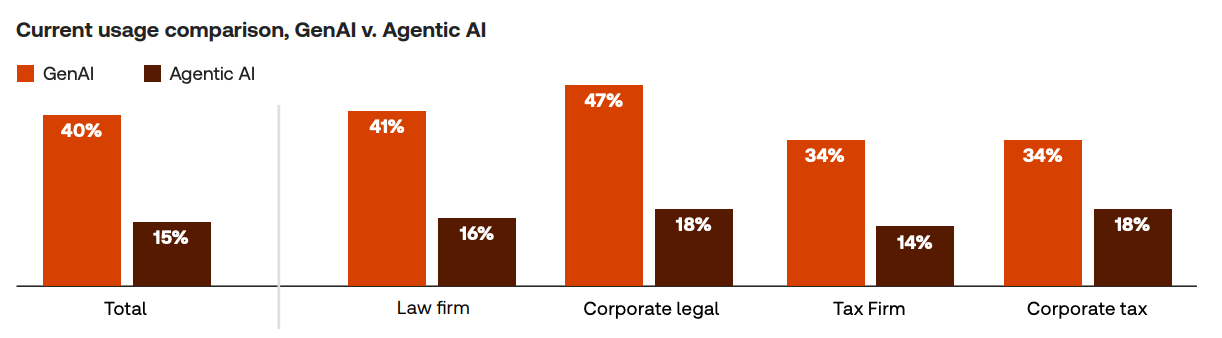
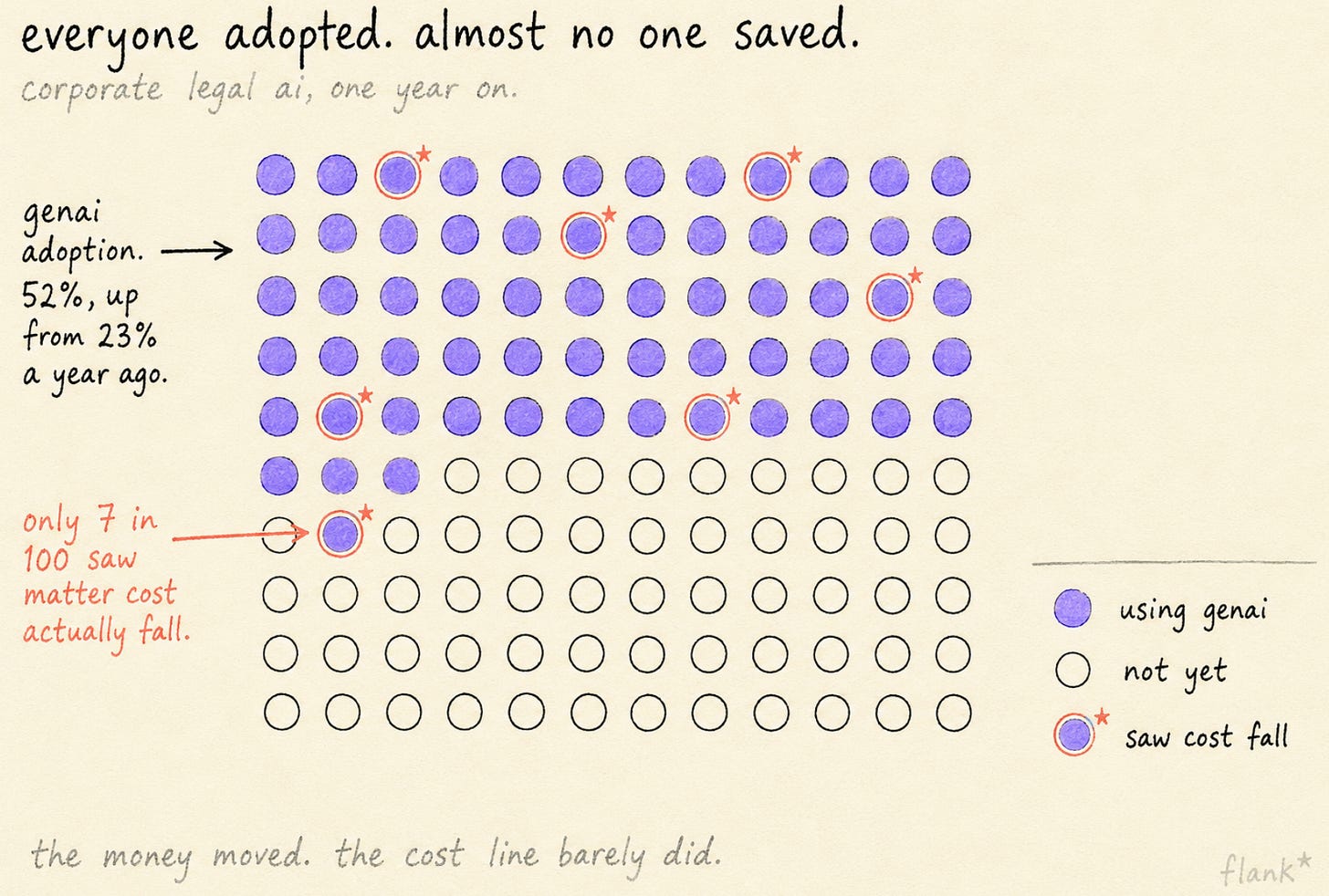
The ACC’s 2026 data puts corporate legal AI adoption above half, more than double the year before. In the same survey, only 7% of teams report an actual reduction in total matter cost. Two years of budget, board mandates and real enthusiasm, and the thing the money was meant to move has barely moved.
I don’t read that as a failure of the technology. I read it as a category error. Almost everything deployed so far makes individual lawyers faster: a better drafting assistant, a research tool that reads faster than any associate, a chat window that knows more law than the person typing into it. All useful. None of it changes who picks the work up off the pile. The lawyer is still doing the contract, now with a sharper instrument, and the sharpness of the instrument was never the constraint.
⚡ Two different jobs
There are two things you can do with this technology, and I find most teams have quietly done one while believing they were doing the other.
The first is to make your people more capable. This is what a general tool like Claude does well, and it is where the shared brain lives. The brain works not because it stores documents but because it grounds a group of individuals, each using AI on their own, in the same context. Everyone’s output now pulls from one source of truth. A signal that surfaces in a customer call can, if it proves out, climb into the strategy the whole team reasons from. The unit that gets smarter is the team, not the person. That shift, from the individual to the system, is the part I think people underrate.
It made us faster. It did not take a single piece of work off our plates.
The catch is that shared context rots. The brain that made everyone sharper in March is quietly misleading them by June if nothing tends it. So you point agents at it: small scheduled jobs that remove what is out of date, strip duplication, and flag where two parts have begun to contradict each other. That is the drift my check caught. Without that upkeep a shared brain becomes a shared liability, people stop trusting it, and a source of truth nobody trusts is just a folder. The maintenance is not overhead. It is the thing that keeps the brain alive.
But notice the ceiling. Done well, this makes everyone better at the work. It does not remove the work. I am still writing the post; my team is still drafting the contract. We do it faster and more consistently, which is worth a great deal, but the pile is the same size at the end of the day.
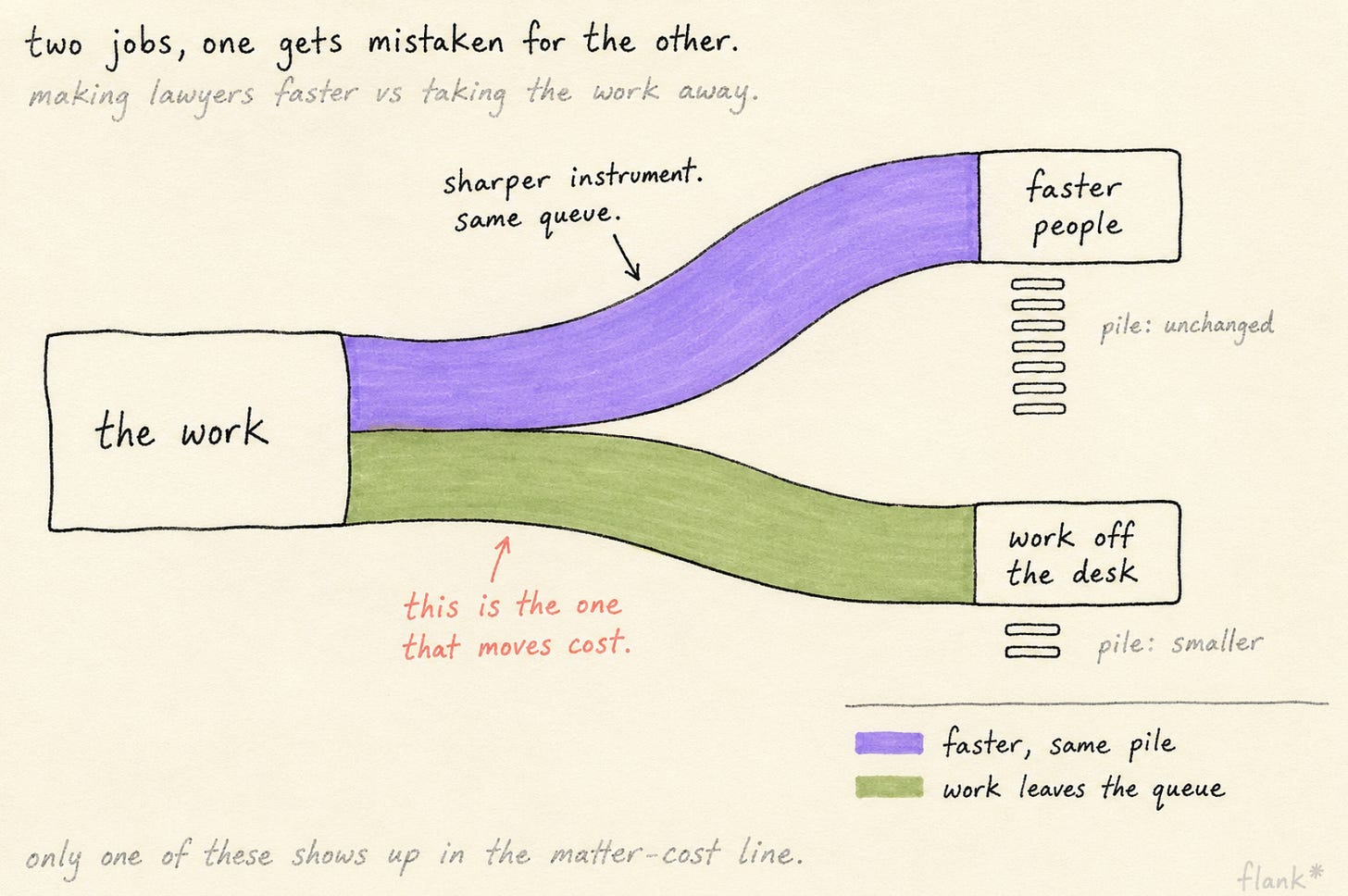
The second job is to take the work off their desks entirely, and it is a different category. Some work you do not want your team touching at all: not because they can’t, but because it is high volume, rule governed, and a poor use of expensive judgement. The routine NDA, the standard vendor agreement, the counterparty paper that follows a pattern you have seen a thousand times. Until recently the only way to move that off your team was to send it out, to outside counsel or an offshore centre or a managed service. Someone else’s people, still doing it by hand, still billing by volume, and the context and control left with the work.
An agent that owns the whole workflow is the other option, and its shape matters. The request arrives where it always has, usually an email, from a business user who learns no new tool and changes nothing about how they ask. It gets triaged and routed, to a person or to an agent. Where an agent picks it up, it drafts the document or redlines the counterparty paper against your playbook, and where it hits something high risk or low confidence, it stops and asks. The work leaves the lawyer’s queue. What arrives instead is a decision, not a task.
The maintenance is not overhead. It is the thing that keeps the brain alive.
🔍 Supervision is the product, not the caveat
This is where people expect me to reassure them about accuracy, and I think accuracy is the wrong thing to fixate on.
The question a general counsel actually asks is not “is it right.” It is “can I stand behind it.”
The question a general counsel actually asks is not “is it right.” It is “can I stand behind it.” An output can be correct and still useless to a lawyer who has no way to satisfy themselves that it is, because the accountability does not transfer. Their name is on the work. Hand them a finished document and tell them it is done, and they will do what any careful person does with something they are answerable for: re-read all of it. At which point you have spent what it would have cost to draft it.
So the thing that makes this work is not the model getting the answer right. It is the surface the lawyer reviews it through, one that flags only the decisions a human needs to make and lets everything the agent is confident about pass. You stop checking the work and start checking the exceptions. I think that is the most important design choice in the whole system, and the one that gets the least attention, because it is less impressive in a demo than a clean draft appearing from nowhere.
Picture the lawyer’s side of it. A counterparty NDA comes back, already redlined against the team’s playbook. Most of it is resolved and marked as resolved. Two points are flagged: an indemnity outside the team’s usual position, and a governing-law clause the agent was not confident it had mapped. The lawyer looks at two decisions rather than forty clauses, makes the calls, and the response goes back out. The thing that used to take an afternoon is now a couple of judgements and a signature. None of it depends on the agent being perfect. It depends on the agent being honest about the two places it was unsure.
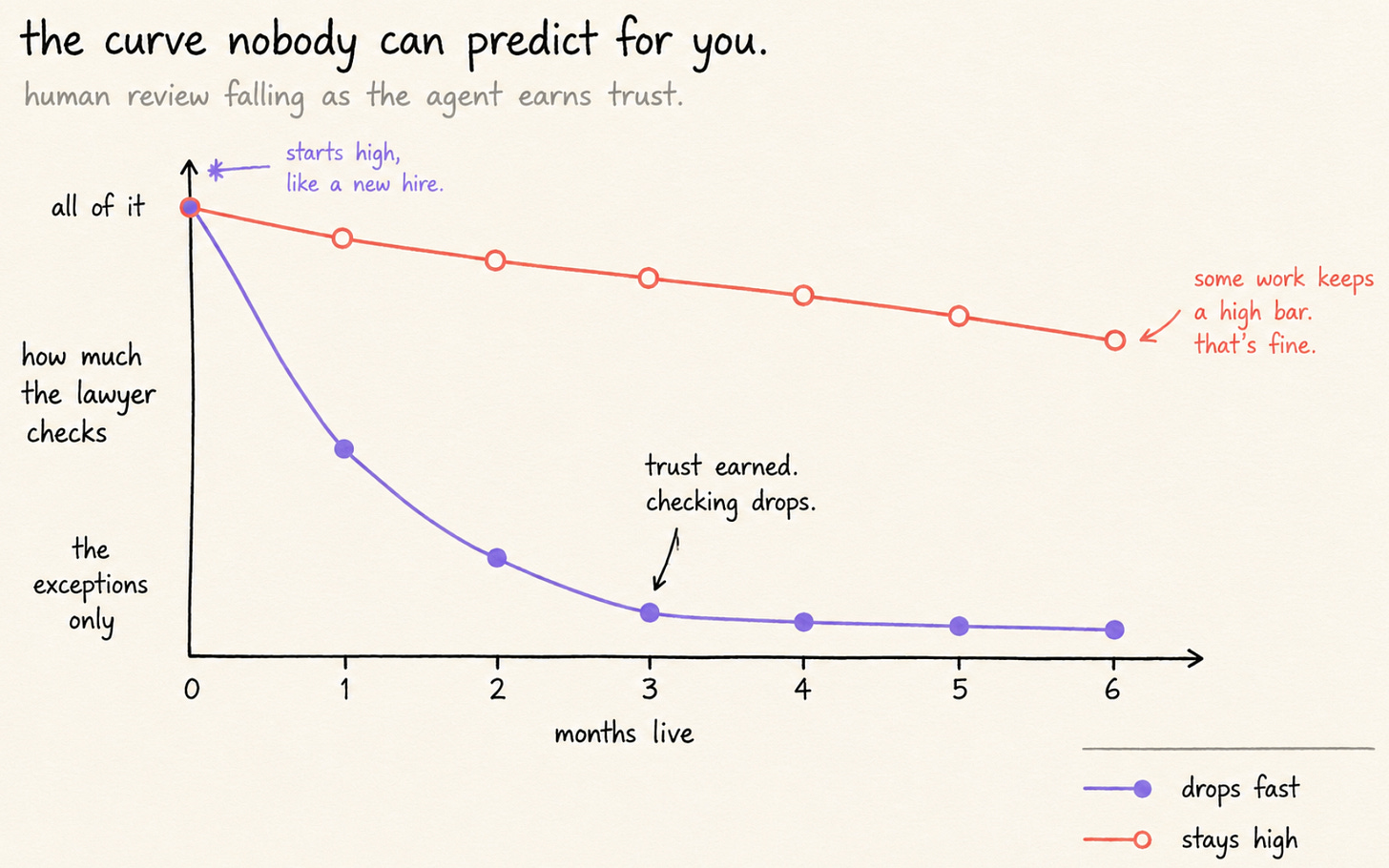
The amount you check also falls over time, and it does not start low. Early on a lawyer checks a lot, the way you would with a capable new hire whose judgement you do not yet know. As the playbook tightens and corrections feed back, the checking drops. I have seen teams barely review a given workflow after a few months, and others hold a high rate for far longer because the work warrants it. That curve, human input falling as the agent earns trust, is the real shape of adoption: slower than the demo implies, more durable than the press release. I don’t think anyone can tell you in advance where your curve settles or how fast it gets there. You find out by running real requests through it and watching.
You stop checking the work and start checking the exceptions.
Where this leaves you
If your AI spend has made your team faster and your cost base has not moved, I don’t think you have done anything wrong. You have done the first job. It is worth doing, and cheaper and quicker to start than most people expect. Build the shared brain; it compounds. But it was never going to shrink the pile, because making a lawyer faster and removing the lawyer from the routine work are not the same act, and only one of them shows up in the matter-cost line.
The second job is a different decision, and it feels less like buying software and more like changing where the work goes. It sits in the same budget you already spend getting routine work done outside the team, usually far larger than the software line, and it keeps the context and control inside the building rather than shipping them out. What holds it back is not the technology. On the harder, more variable work I am routinely surprised by how much it can do. It is that letting whole categories of work leave your team’s queue is a management decision before a technical one, and most people have not yet decided how much of the day they are willing to hand over.
That, I think, is the real question under the 7%. Not whether the agents are good enough, but how much of your team’s work you are prepared to stop doing, and how quickly you can learn to trust what comes back when you do.
✳️
Making everyone faster is the first job. Taking the work off their desks is the second, and it lives or dies on what the lawyer actually sees. In the upcoming weeks, we’’ll write more about that.