Hi, I'm Lorna and I've spent my legal career trying out different hats until I ended up designing my own.
At Flank, I lead the Legal AI Alignment function.
Figuring out what AI can’t do for me
I’ve had to ask myself some hard questions lately.
Where do I see the legal profession going? How has it changed over the last 15 years and how is it changing now? Where do I see myself fitting in?
I’m not going to fool anyone by pretending I have a tidy answer to the last question. That said, I do have a much clearer view of where a lawyer’s value actually sits now, and it starts with the blunt acceptance that it’s genuinely not where I spent most of my twenties assuming it was.

When I started out as a law student, I remember feeling daunted, uncertain and a bit of a misfit. Everyone else in my class seemed to have a clear trajectory planned - get a first, secure a training contract, qualify, specialise, and either get on track for partnership or eventually go in-house to become a general counsel. The handful of alternative paths you’d hear about were legal director, knowledge lawyer or innovation specialist.
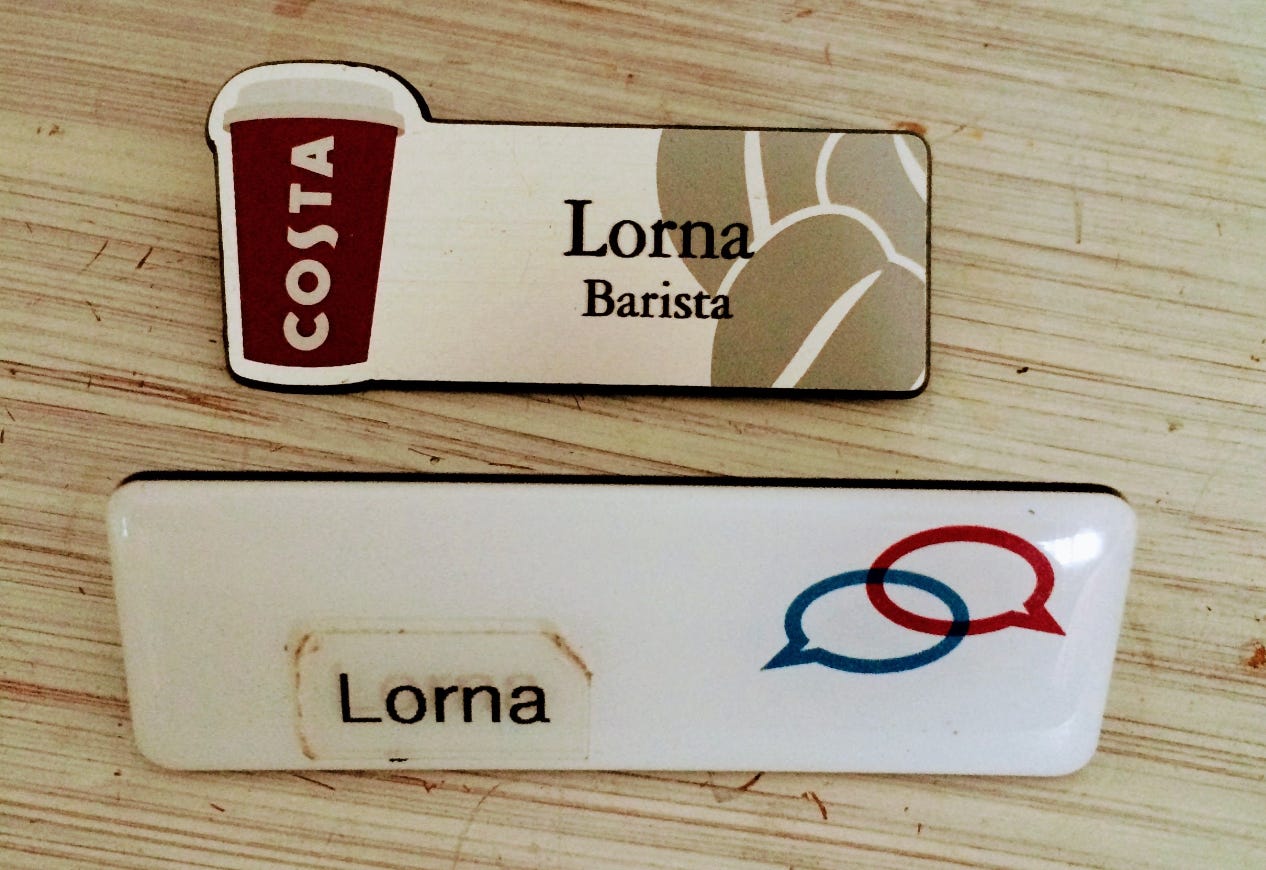
Between my work as a barista during the day, library clerk on the weekends and conference assistant during the holidays, I had little bandwidth left to strategise about what it is I actually wanted to do after I left the cosmopolitan bubble that the University of Warwick was known for. Instead, I went for breadth and took any opportunity that came my way - doing research for the student TV, organising fundraisers for charities, a sponsored undergrad research programme into foster care, writing a dissertation on feudal systems, volunteering at the law centre’s dedicated unit for asylum seekers, to name a few examples.
Given my, let’s call it, eclectic background, I always struggled sitting down to write a convincing application to any law firm making my case for why I’d be a good fit for a training contract. I struggled convincing myself of that narrative, to be honest, so I’m not surprised that I kept getting rejection after rejection. Interestingly though, each rejection felt a little comforting - a confirmation that I didn’t belong or want to belong in the law firms I was applying to. However, this all changed when I came across Pinsent Masons. I felt I’d found a firm that seemed to tick all the boxes for me - friendly people, family friendly and invested in innovation. There was no stopping my resolve from that point on. Not even the initial rejections wore me down. Three whole attempts later, I was (at long last!) firmly locked into a training contract.
I found myself repeating the same patterns once I joined private practice. Looks like my modus operandi was pretty much established early on. Call it insatiable curiosity, impatience, short attention span or a combination of all of the above - I cannot help but try my hand at anything that interests me. Over time, this meant working with teams all over the country, across various practices (litigation, advisory, innovation) and taking on client secondments in completely unknown territory (like reinsurance, for example!). It was soon clear to me that I was not ready to commit fully to any one area of specialism. I was still searching for my identity as a professional. I envied people who could command a room on a particular topic and go deep - citing case law with precision and taking questions from the audience with the casual air of a seasoned professor.

When I went in-house after five short years in private practice, it felt like a breath of fresh air at first - shedding the label (and pressure) of my subject matter expertise (in my case, it was pensions law). I soon realised, though, that in focusing so hard on being the expert in the room during my early years in private practice, I had completely neglected the best part of being a lawyer - the human relationships. Throwing myself into an in-house role at a fast-growing fintech business gave me a taste of human partnership - the legal team is here to enable, to support, to protect (and yes, sometimes that means strongly recommending against doing something the business really really wants to do) no matter whether the initial advice was followed or not. Legal is a true ally of the business.
Unfortunately, we get a bad rep because, guess what, knowledge work requires a lot of thinking and precision, both of which take time and often surface some uncomfortable realities. We then end up with the label of ‘blocker’, or more commonly, ‘bottleneck’. You can tell that we really internalised this unfortunate label in my previous organisation where we used to call ourselves the ‘YES team’ to reclaim the narrative and share the messaging that, unlike what you might have heard about our kind, we were not going to be the ‘Department of No’.
However, Legal doesn’t have to be a yes-man nor a permanent stop sign. It can be the judgment layer that sits behind the decision, once we have built ourselves a filter for the noise - so the business can make decisions based on a full picture, knowing exactly who is accountable in that process too.
Legal doesn’t have to be a yes-man nor a permanent stop sign. It can be the judgment layer that sits behind the decision, once we have built ourselves a filter for the noise.
I learned very early on that a large part of why there is so-called friction in legal work is not down to lawyers being unnecessarily pedantic about contractual clauses. An incredible amount of time and effort goes into the absolute basic steps before any serious thinking can even start. Let me give you a couple of examples:
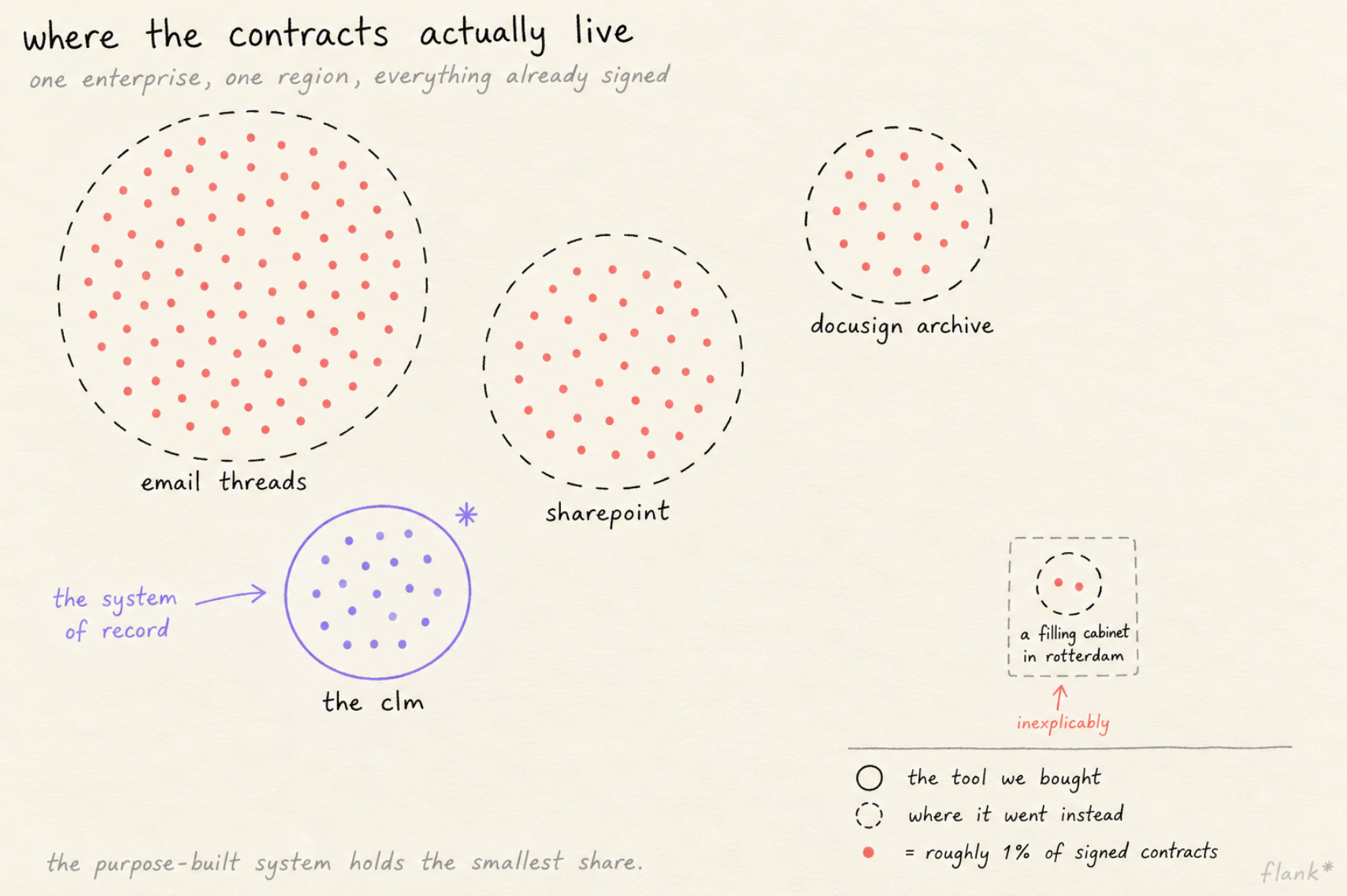
Avoidable friction: Your CEO messages you about a customer emailing to terminate a contract. No other context provided, except for a screenshot of said email. You now need to go and find said contract, review the email thread, ensure there were no amendments made after this filed version of the contract was signed, speak to the person who owns the customer relationship to check the background to the email in the first place. A whole lot of investigation needs to take place off the back of one simple query. Almost all of this melts away if you have a contract record you actually trust.
Necessary friction that’s probably here to stay: Your sales lead reaches out about an obscure question that a prospective customer has asked about your product architecture and how that’s mitigated by a particular provision in your contract. You need to go and speak to an engineer, check with your security counterpart, review the contract, assess the prospect’s actual concern and sense check that any response you share is aligned with your vendor due diligence responses. No tool will fill in for decisively knowing which engineer to ask, what the prospect is really worried about underneath the question they asked and the boundaries that your business is comfortable stretching to without reckless overexposure.
Legal work is complex and layered. It frustrates me when legal work is reduced to a binary state and when this appreciation for complexity is completely lost. Most of the friction actually comes from the preparatory steps we have to take before we can even start to think about the problem at hand meaningfully. Some of these steps can be avoided entirely (for example, if the contract database was up to date and reliable) but some steps cannot be avoided nor can they be skipped because even fact-finding requires specialist skills - you need to know what to look for and what questions to ask.
When I think about my relevance today, this is what I come back to. I think that a lawyer’s value lies in connecting the dots between information points and sharing their informed judgment. That means we need to be ruthless about eliminating any noise that stops us from doing this, but we cannot delegate the connecting of the dots itself. We cannot outsource this part of the thinking to AI because AI does not see AND feel everything that we think, see and feel.
I think that a lawyer’s value lies in connecting the dots between information points and sharing their informed judgment.
It’s quite scary to work with a tool that knows a lot more than you do, especially when your entire USP to date has centered around being a subject matter expert. But expertise is changing shape. It’s about increased visibility rather than better execution. We have to hone our judgment, our taste-making, by leveraging tech to remove noise so our senses are sharpened. I don’t want to be an AI-assisted lawyer who is relying heavily on AI to do legal work faster - a) I find fun in the thinking part of the job, so this is a guaranteed fast track to boredom and b) what is the point of automating myself away so willingly without backfilling any improved value add?
There are a lot more pathways open in the legal profession than there used to be even five years ago. If no hat fits, there’s also never been a better time to design your own - legal engineer, alignment lead, AI specialist, AI governance expert, legal AI expert, fractional GC, fractional legal ops lead. The misfit problem sorts itself out once the paths multiply. I know that because the job I do now didn’t have a name when I was writing those training contract applications. The legal profession has never looked more unsteady, in a good way.
Where do I see myself fitting into this new version of the legal profession that’s actually still in formation?
Well, I’m still figuring it out. I know that I don’t want to be a human AI wrapper, nor do I want to be a technician purely deploying and maintaining AI systems that can do my job better than me. What I do know is that I want to do everything that I possibly can to preserve my uniquely human qualities - whether that’s sharing the camaraderie that forms when you’re getting a ridiculously protracted negotiation over the line, or the bonding that happens when you’re dealing with a security incident and need to reassure the business, or the instinct that kicks in when you’re mid-dispute and you sense exactly what the other side cares most about.
✳️