A few weeks ago our product designer came to me and told me he was having a crisis. Not a vague one. He sat down and said, fairly directly, that it felt like his role had changed underneath him and he was not sure what was left of it.
I knew what he meant before he finished the sentence, because I had been circling the same feeling about my own job for a while without saying it out loud.
His version went like this. Not long ago, designing meant spending most of your time in the detail. Hours in Figma building individual components, assembling those components into UI flows, handing the flows to engineers, then sitting with those engineers to make sure the thing got implemented the way it was drawn. Around that, the good parts: talking to customers, watching them work, absorbing the context that tells you what to build. But the centre of gravity, the bulk of the hours, sat in the careful construction of screens.
That centre has gone. The detailed bit, the building and the handoff, is no longer necessary in the way it was. Claude does that work now, and it does it astonishingly well. It has seen more design than any individual designer could absorb in a career, and it assembles a clean, considered interface faster than anyone can draw one. I am not going to pretend that is a small thing or dress it up as a productivity gain. The part of the job he was best at, the part he had spent years getting good at, can now be done by a model in minutes.
What I find interesting is what happened next in that conversation, because it is the whole point of this piece. He was unsettled, genuinely. And in almost the same breath he saw the opportunity, which was that if the detail is handled, the designer is free to do something more valuable than the detail ever was.
Execution goes first
I think the pattern underneath all of this is simple to state and uncomfortable to sit with. AI eats the execution layer of a role before it touches anything else. The part of a job that is careful, repeatable production, the part where you take a known intent and turn it into a finished artefact, is exactly the part a model is strongest at. The judgment about what the artefact should be, and whether it is the right artefact at all, is the part it is weakest at.
So roles do not disappear evenly. They hollow out from the middle. The execution that used to fill most of the day gets cheap, and what is left is the thing at the top, the judgment, and the thing at the bottom, the understanding of the problem. The middle, the part that used to be most of the work, thins out fast.
The awkward consequence is that the middle was where a lot of people lived. It is where craft pride accumulated. It is where whole roles existed whose entire purpose was to carry intent from one stage to the next. When the middle collapses, those roles do not get more efficient. They get reconfigured into something with a different name and a different centre.
From building screens to guarding the system
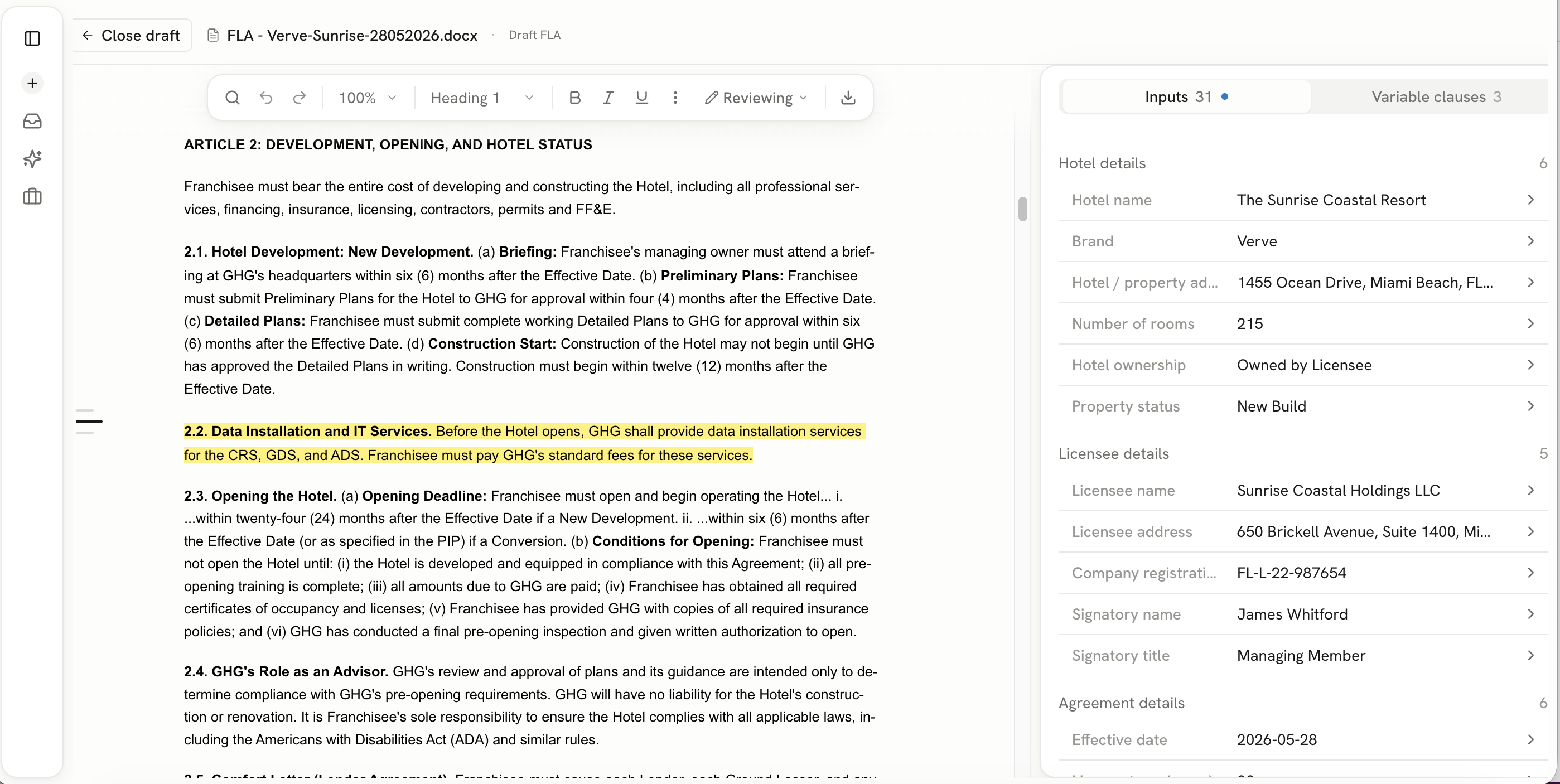
My designer worked his way to a sharp version of this faster than I did. If the model can build the screens, the designer's job is no longer to build them. It is to decide what good looks like here and to make sure everything the model produces meets it. He has moved from being in the detail to being the safeguard of the system: he owns the design system, the rules, the articulation of what great design means at Flank specifically, and he draws the line between what gets generated and what a human should still touch. The taste is now encoded in the system rather than applied screen by screen.
The shorthand we landed on is UI designer to creative director. I find that a genuinely better job. It is also, undeniably, a different one from the job he was hired into, and that is the part worth being honest about rather than smoothing over.
My own role, turned over
The same thing has happened to me. I used to spend a meaningful share of my time on the connective tissue of product management: writing tickets, keeping boards current, scoping work into something an engineer could pick up. I was good at it, and I would have told you that scoping a piece of work cleanly was part of what made me useful. That work is largely gone from my desk now, and Claude does most of it better than I did. Something I attached a bit of professional identity to is now done faster and to a higher standard by a model. Dead. Arguing with that is a waste of the time you have just been given back.
What I got in return is more than a fair trade. The hours that used to go on delivery admin now go into sitting with customers, watching them work, absorbing the context no transcript carries. And when I do scope something, I am doing it next to a sparring partner that holds the full context of the company and asks the questions that force me to define what we are actually trying to achieve. I have even gone deeper into the detail, just at a different point: rather than describe what we need and pass it down a chain, I will often build the thing directly with vibe coding tools, and that working prototype, customer context already baked in, becomes the guide our engineers make enterprise-ready.
The middleman steps between understanding the problem and shipping a response are disappearing. The line I keep returning to is that those steps used to be whole roles. The translation of intent into specification, specification into artefact, artefact into implementation. Each handoff was a job, sometimes several. That is the part that is thinning out, and pretending otherwise helps no one.
It should be unsettling
I do not think you can engage honestly with this and come away purely excited. It is both, and I have come to think the unsettled part is load-bearing. If a change of this magnitude does not unsettle you even for a moment, I suspect you have not really looked at it. A lot of people are skating over the detail right now, treating it as a productivity story, a faster horse, when entire roles are being reconfigured underneath them.
We have not had much resistance internally, which I now think is selection rather than luck. We hire for adaptability of mind, and that is the trait that matters most in a year like this one. The people who move quickly from threat to opportunity do well. But the fear was real. My designer's "I feel like my role has disappeared" was met with my "yeah, me too." The honesty came first, the opportunity second, and it only held because we let the first part be true.
The same move, in legal
I spend my days building product for legal teams, and what strikes me is that the shift I have just described is precisely the shift happening to the lawyers we build for. The same hollowing from the middle, on a longer timeline and with higher stakes.
A great deal of what a legal team does is execution. The contract that follows a template. The NDA that has been turned a hundred times. The vendor agreement reviewed against positions the team knows by heart. The routine question answered in two paragraphs. This is real work, it requires a qualified person today, and it consumes an enormous proportion of expensive legal hours. It is also, structurally, the execution layer of the role. Which means it is the first thing to go.
When the routine execution is handled by agents working to the team's own playbooks, the lawyer's job does not vanish. It reconfigures around the two ends that survive. At the top, the judgment: setting the rules the agents follow, supervising the work, deciding the exceptions, owning the standard. At the bottom, the understanding: knowing the business, the risk appetite, the commercial intent behind the words. The lawyer moves from doing the routine work to supervising the system that does it. This is the model we build toward at Flank, and it is the same move my designer made when he went from drawing the screens to owning the design system. The work never leaves the building. The team keeps control. What changes is where the hours go.
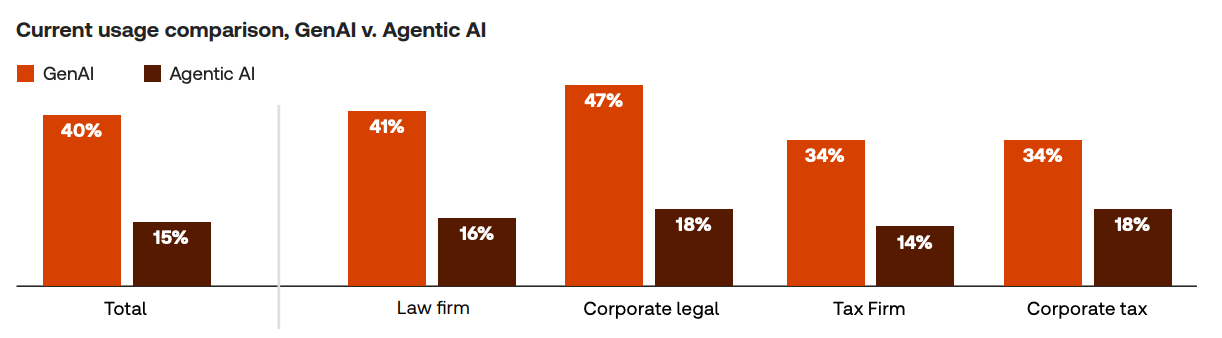
The optimistic reading is the honest one as far as it goes. The lawyer spends less time on volume and more time on the work only they can do. But I do not think you get to keep the optimistic reading unless you also accept the hard half of it, the same hard half I have had to accept about my own job. Some of what people trained for over years genuinely goes away. Some of the craft a lawyer takes pride in, the meticulous turning of a routine agreement, becomes something a supervised agent does faster and more consistently. The identity attached to that craft takes a hit. You can see this starting in the open already, in the survey data showing in-house teams expecting to pull routine work back from outside counsel, in analysts forecasting that the majority of routine contract review moves to escalate-by-exception systems within a few years, in firms quietly reorganising around it. The direction is not really in doubt. The honest part is what it costs the people living through it.
I do not think the answer is to soften that. I think it is to say it plainly, because the teams that say it plainly are the ones reorganising fastest around what is left, and what is left is more valuable than what went.
Where this leaves me
So I find myself telling our customers something close to what I told my designer, and what I have had to tell myself. The role you trained for is being turned over. The middle of it, the careful execution that filled most of the day, is moving to the machine, and it is not coming back. The question worth asking is not how to defend the middle. It is what the job becomes when you strip it back to the part no model can do, the understanding of the problem and the judgment about what good looks like, and rebuild the role around that.
I do not have this fully worked out. I do not know yet what a product team looks like at ten times the scale when this is how it operates, and I do not think legal teams have the answer for their own version either. But I am fairly sure the people who do best are not the ones who got there first. They are the ones who were quickest to be honest about what they were losing, and then quickest to see what they had been handed in return.