Book a time with our legal AI experts for a personalized demo of our autonomous agents. The demo itself only takes 15 minutes and you can deep dive into the use cases most relevant for you, whether it's drafting SoWs, reviewing NDAs, or completing infosec forms.
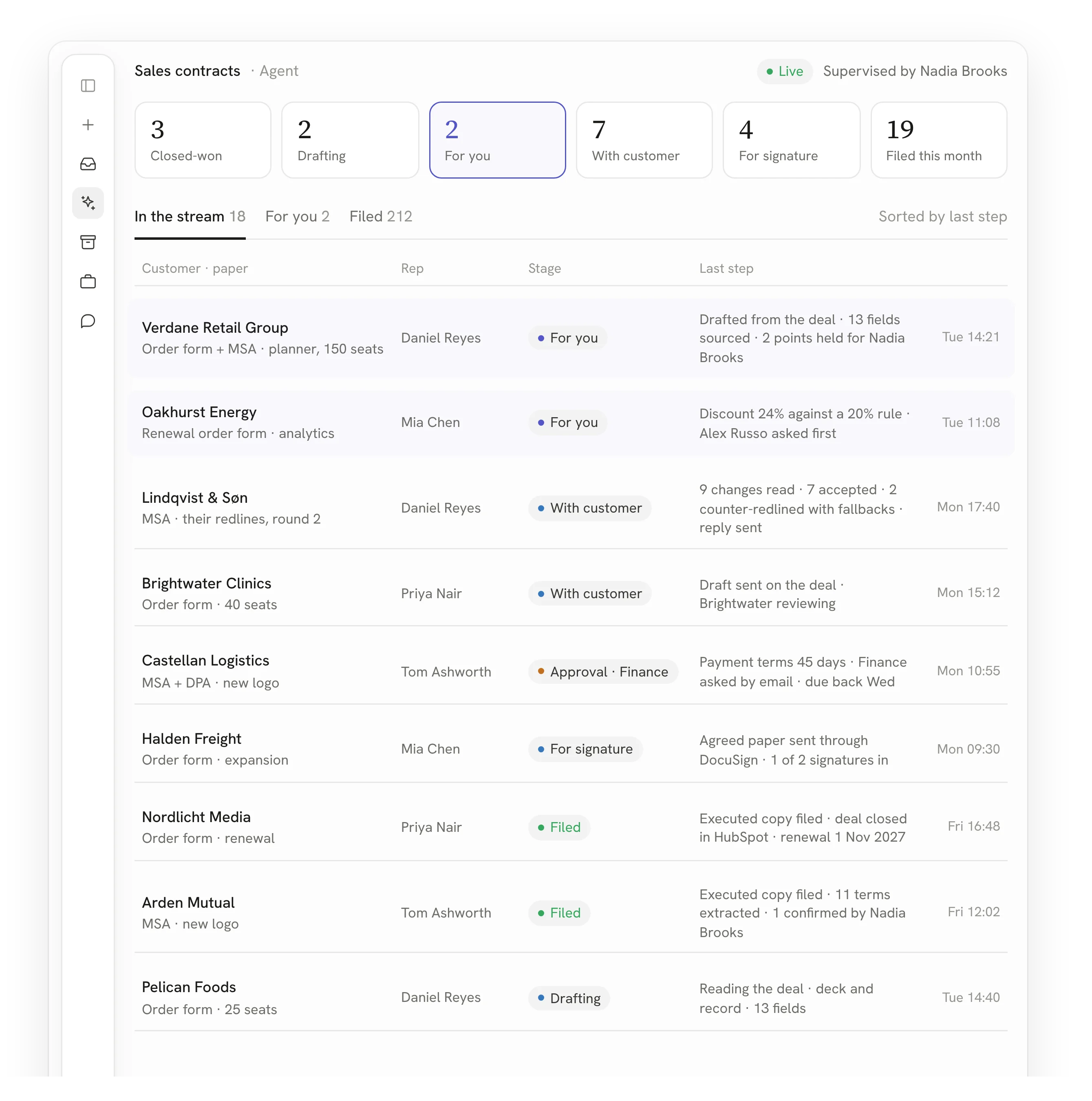
It handles each deal’s paper
from closed-won to the day it is signed
Order forms, MSAs, renewals, and expansions, arriving from sales all year, with no new tool for anyone to open.
One example, start to finish
Screens use fictional deal data.
Five skills, one agent,
and every step in-between
Document drafting
Drafted from the deal as it actually exists, every field and clause decided to your house positions. See the skill.
Answer the customer’s redlines
Each change read against the playbook: accepted, countered with the fallback, or held for a lawyer where something is new. Untracked edits are flagged.
Seek the approvals
A discount past a threshold, non-standard payment terms, a data term: asked of the right person by email, with the clause beside.
Send for signature
Through DocuSign or Adobe Sign, chased, the executed copy collected.
Filing into your record
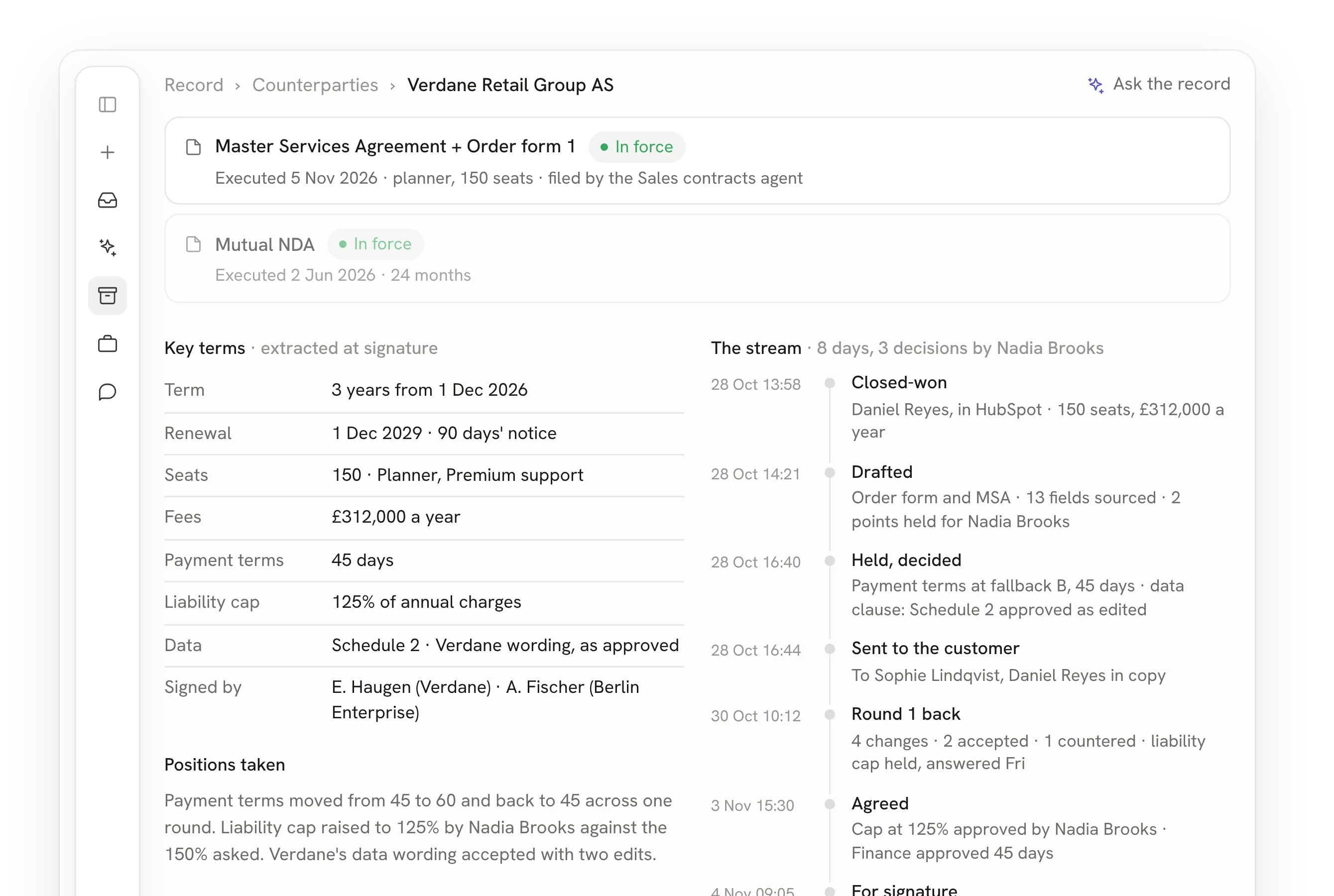
The executed paper filed at signature with its terms, the deal closed in the CRM, renewal dates tracked. See the skill.
Skills from Flank’s library, configured to your positions, paper, and systems; what the library does not cover is built for you.
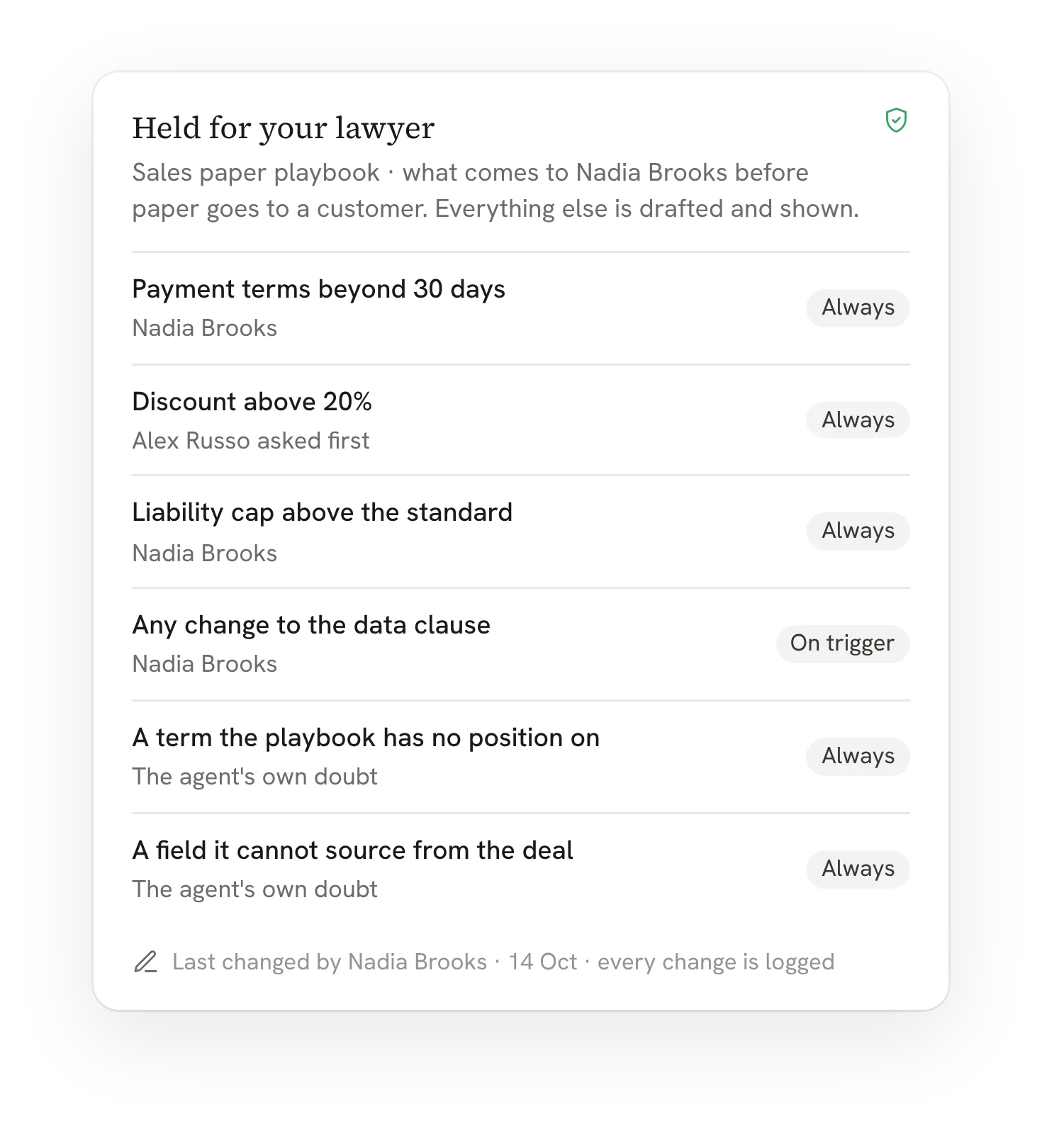
Two things bring a point to your lawyer:
a rule you set, or the agent’s own doubt
A rule you have set
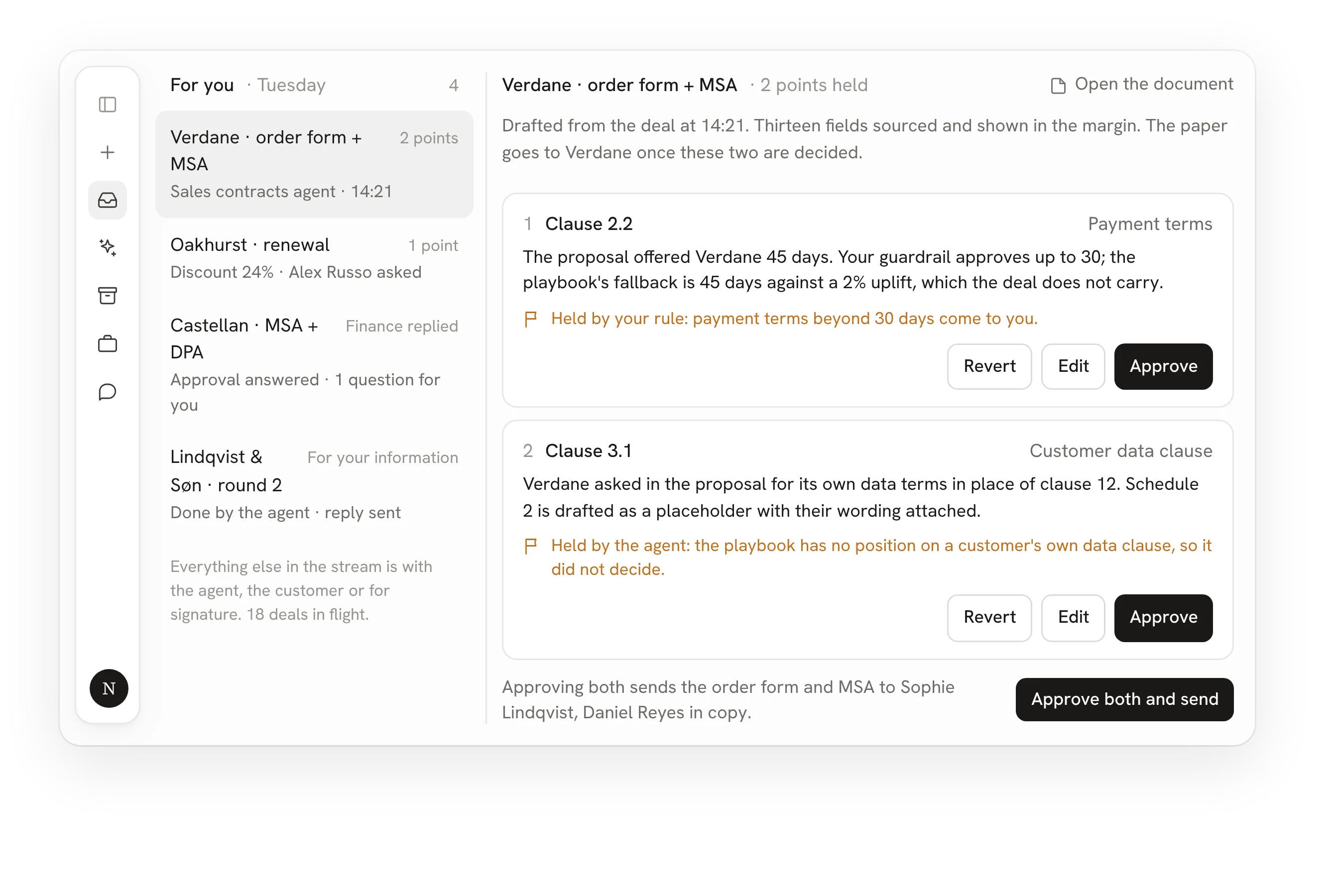
Payment terms beyond 30 days, a discount above 20%, a cap above the standard, any change to your data clause: drafted to your position, then held for your decision.
The agent’s own doubt
The deal and the proposal disagree, or the customer asks for a clause the playbook has no position on: sent to a lawyer, not guessed.
Everything else
Drafted, with every field traced to its source in the margin. Revertible in one click.
Designed with your lawyers,
deployed by Flank
A design document, signed by both sides
What is drafted from which template, which redlines the agent may accept and counter, what is held and for whom, and what comes back.
Your playbook, written down
Written position by position, with the fallbacks, from what your lawyers already do. It changes when you change it.
A prototype on your own paper
Before anything is live, the agent drafts from your last closed deals and answers last quarter’s redlines, and your lawyers compare its work with their own.
Live, in your own environment
Your own private Flank environment in your region, zero data retention at model providers, single sign-on, an audit trail. Fees start when the agent is doing the work.
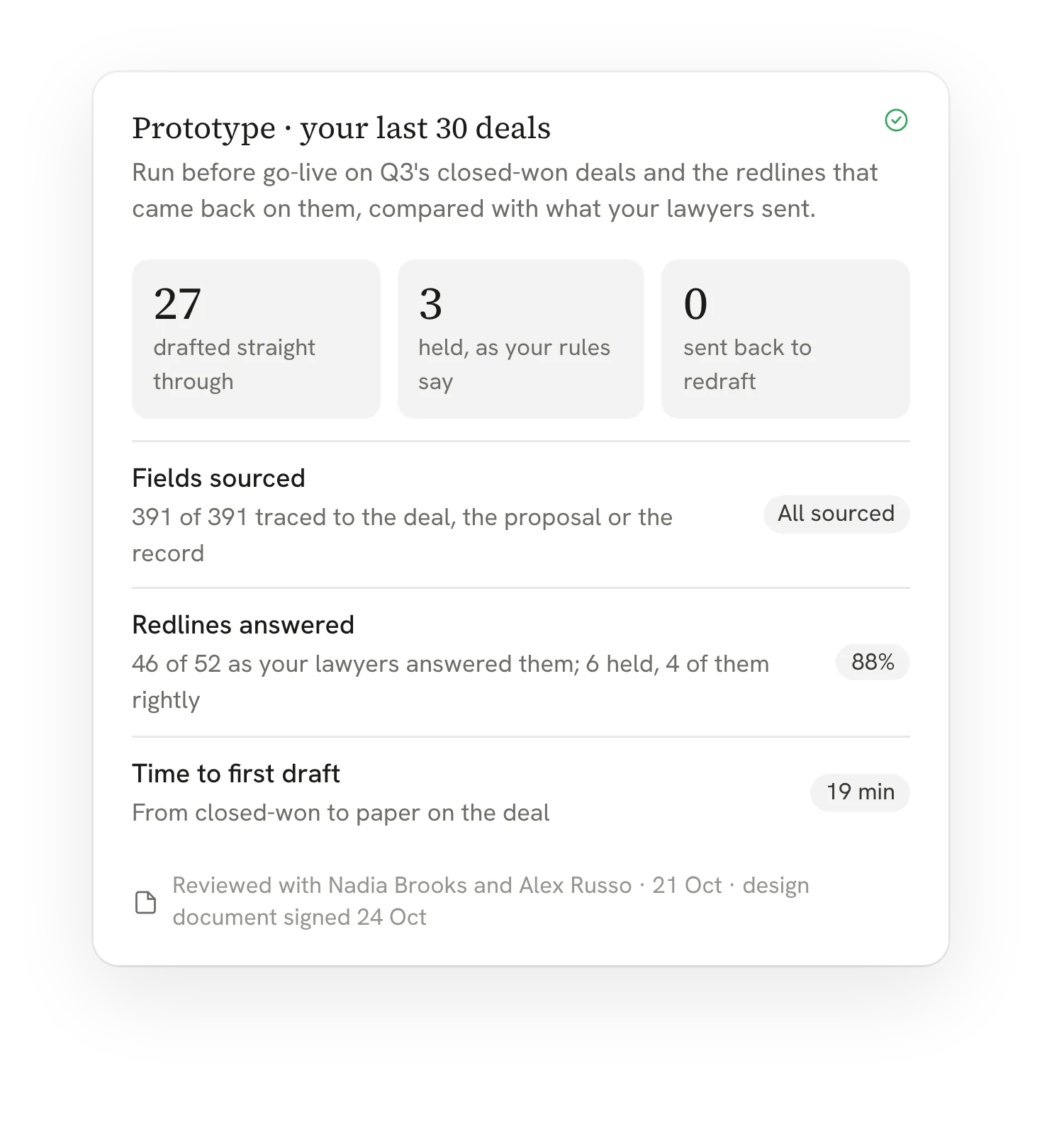
“We run it on the quarter’s closed deals before anyone relies on it. The lawyers read what it drafted next to what they sent, and the design document gets its last corrections from that sitting, not from a workshop.”
JS, Client Delivery Lead
Order forms, MSAs, renewals, DPAs, and the customer’s redlines on each, on your own templates to your own playbook. Agents on this stream are live today at global enterprises.
Sales closes the deal as it always has,
in the CRM or by email
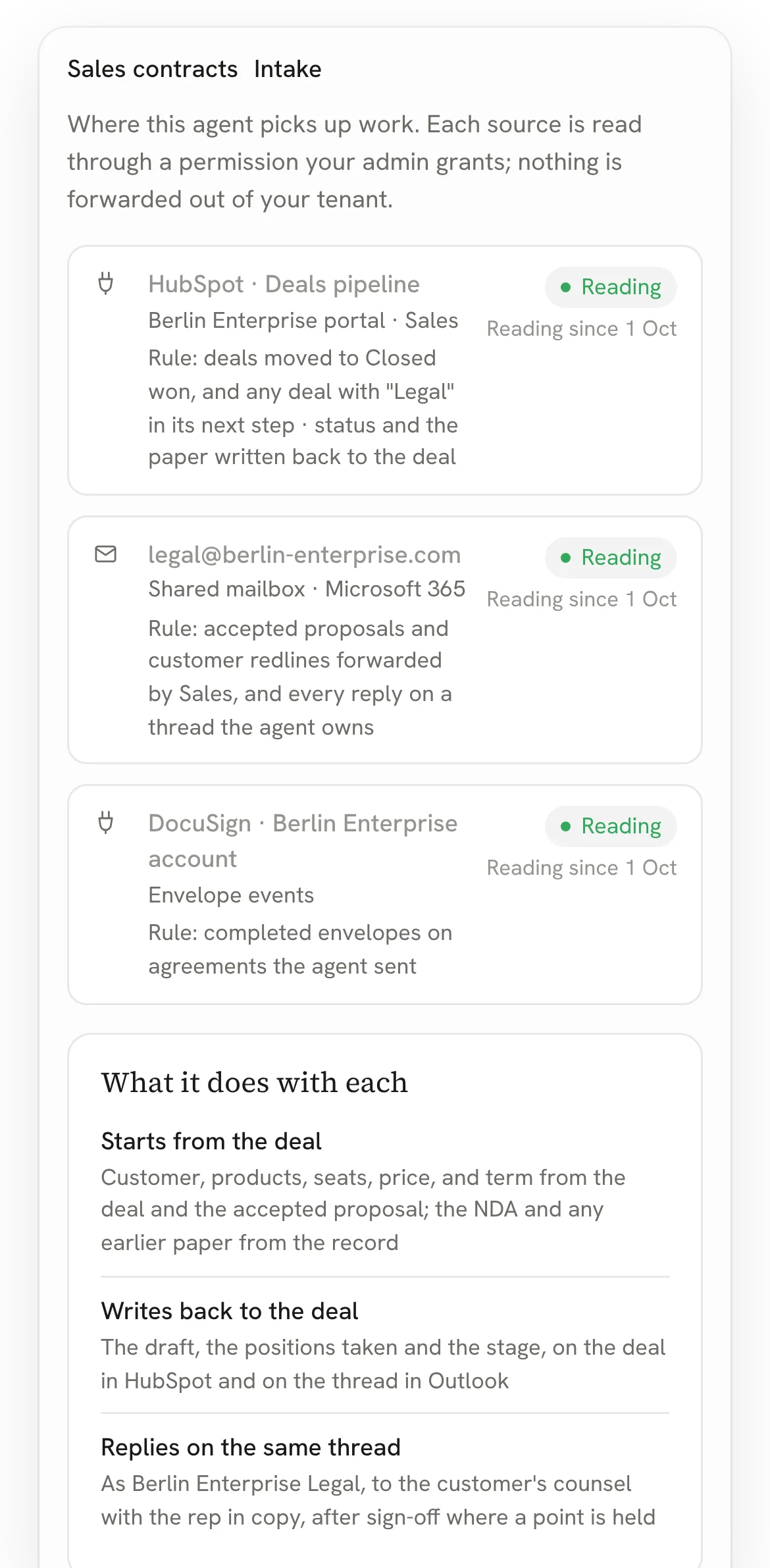
The deal in HubSpot or Salesforce and the shared legal inbox, read through permissions your admin grants. The paper comes back on the deal.
From the CRM
A deal marked closed-won carries the customer, the products, the seats, and the price. The agent starts from the deal and writes the paper and its status back to it.
From the inbox
A proposal or a redline forwarded to legal@ is picked up and labelled In progress, then Resolved, in Outlook itself.
Replies on the thread
The draft and a summary of the positions taken go back to the rep on the deal and on the thread, with legal copied in.
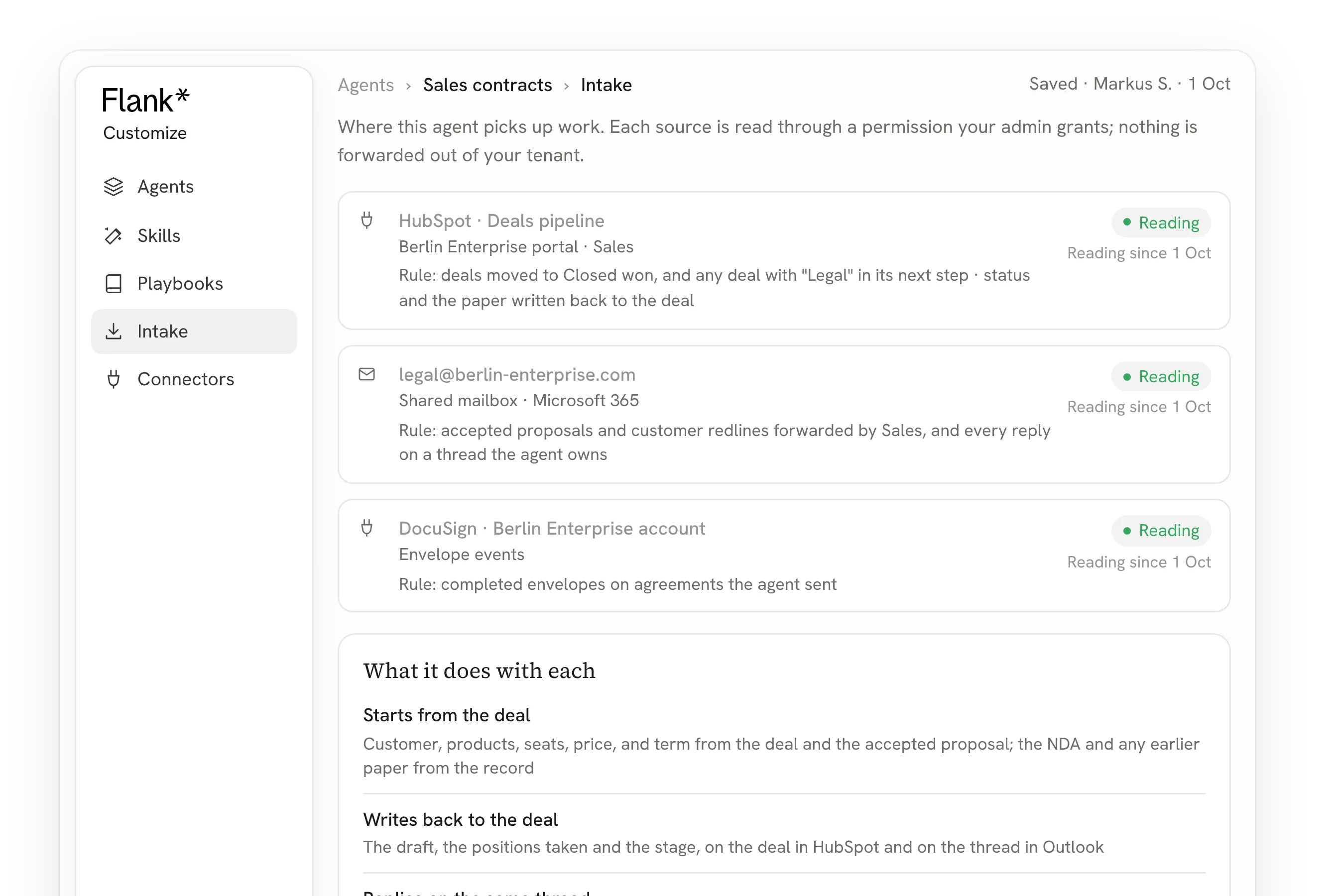
The draft in Word, the deal in HubSpot or Salesforce, signature through DocuSign or Adobe Sign, the executed copy into your CLM. A connector not shown here is built for you.









The questions we get asked first
If yours is not here, bring it to the call.
What if the customer will not sign our paper?
The agent negotiates on your paper to the playbook and holds what is outside every fallback for your lawyer. If the customer insists on their own paper, the Contract review skill redlines it to your playbook, and the same agent can use it.
Our deals are in Salesforce, not HubSpot. Does that matter?
No. The agent reads the deal through a connector to either, with the fields your admin maps. Where the deal is somewhere else, a connector is built.
Who approves the discount?
Whoever approves it today. The agent asks at the thresholds you set, by email with the clause beside, and records the answer. It approves nothing itself.
What if sales sends the wrong deck, or the deal is wrong?
The agent reads the deal, the proposal, and the record together and flags where they disagree. It drafts from the source you ranked first and says so in the margin.
Who is responsible when it drafts the wrong term?
Your lawyers stay responsible for the legal positions. Every field is sourced, every choice shown, and a held point goes nowhere until they decide. Flank is accountable for the agent doing the work as designed.
What about renewals and expansions?
The same stream. A renewal date in the record or a deal moved to an expansion stage starts the agent from the terms already agreed.
What happens next
Bring us your sales paper
We’ll show you the agent at work
One call, then a prototype on your own templates and last quarter’s closed deals, before anything is live.

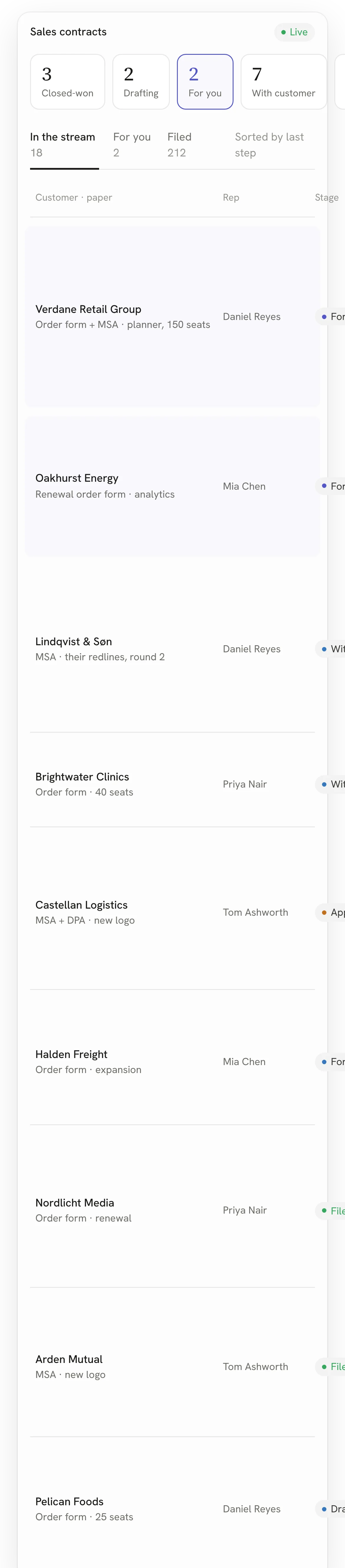
From closed-won to the day it is signed
Order forms, MSAs, renewals, and expansions, all year, with no new tool for anyone to open.
One example, start to finish
01Arrives
Agent · 14:02
Sales marks the deal closed-won in HubSpot. The agent reads the deal, the proposal, and the record, and starts the paper.
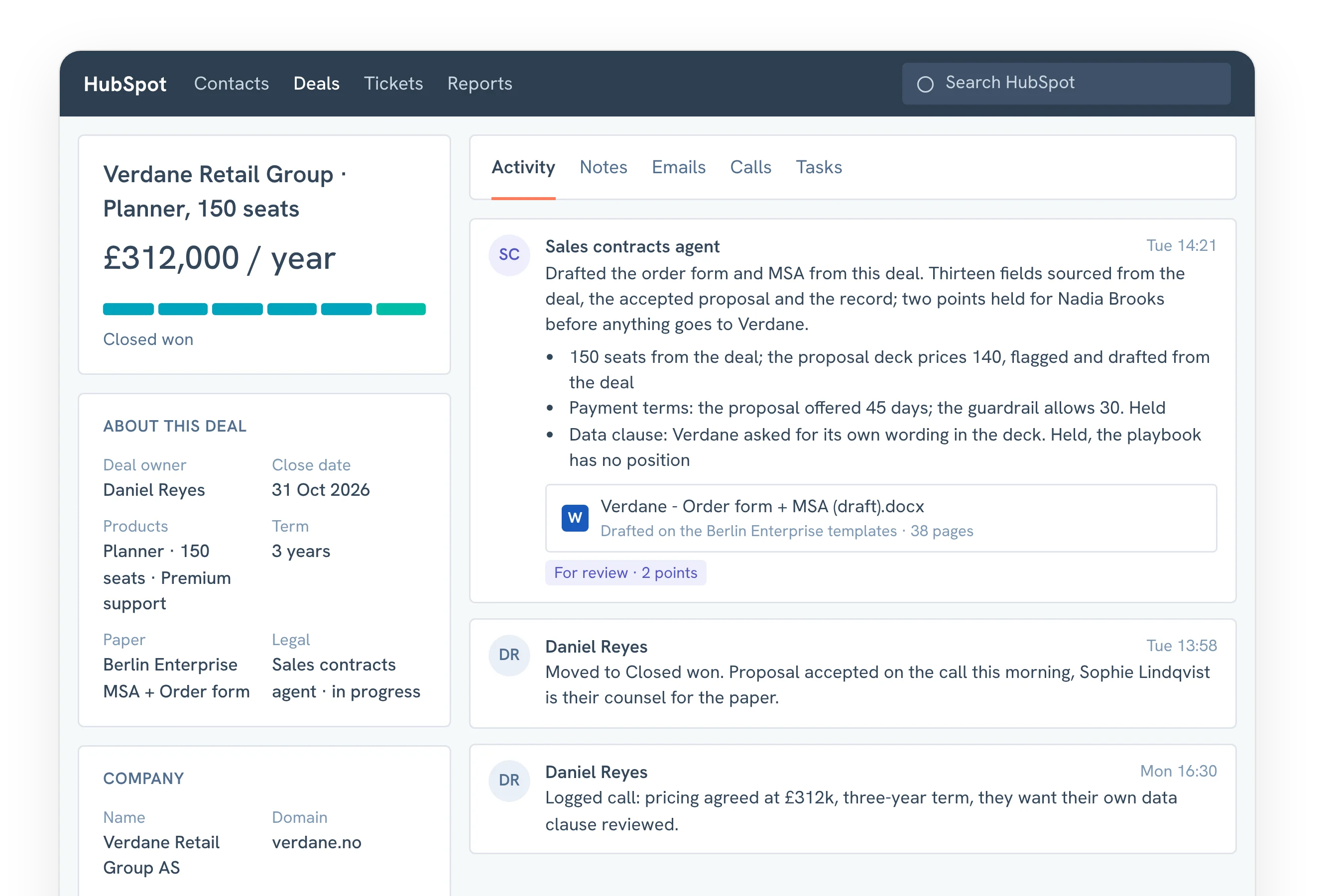
02Drafted
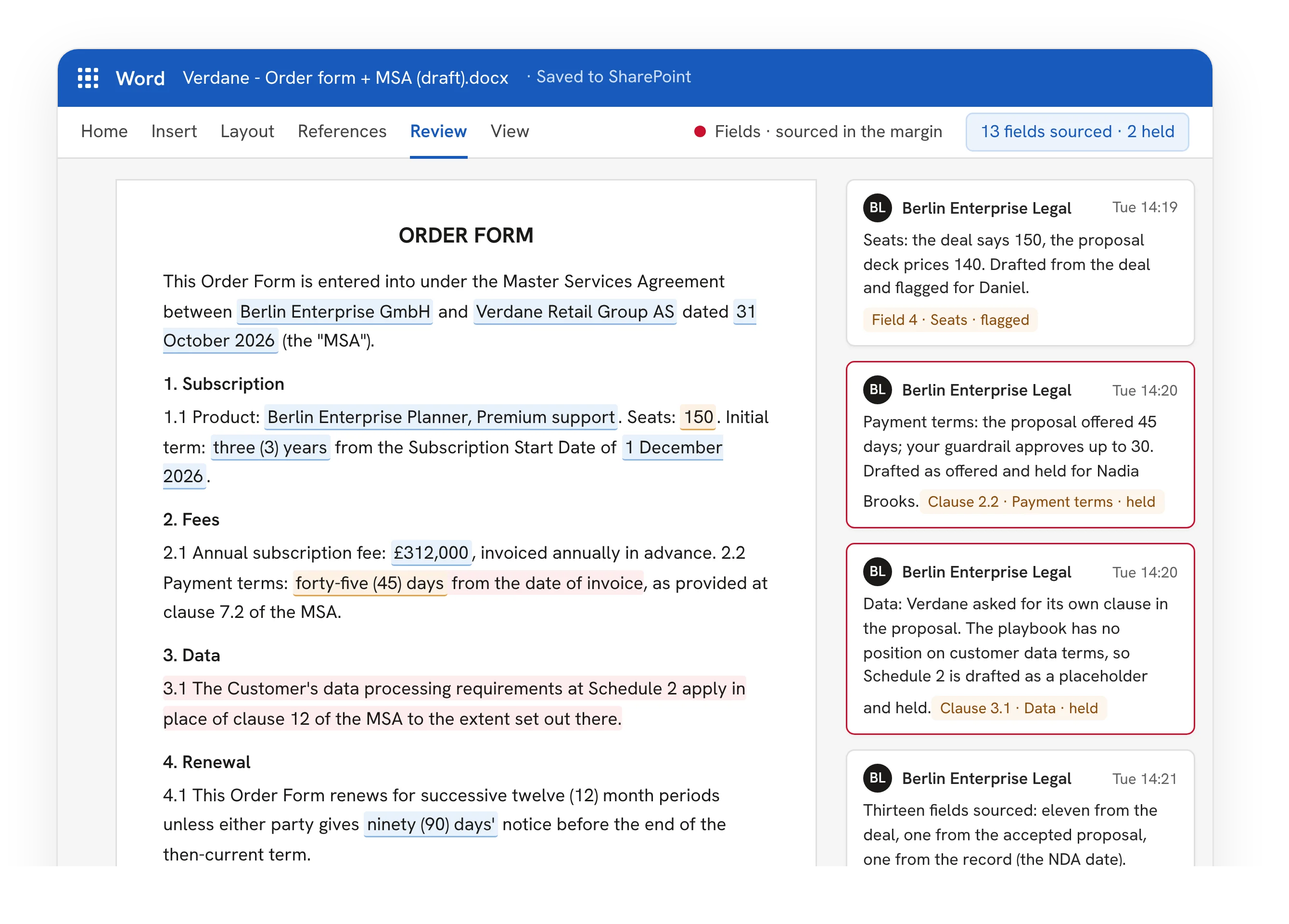
Agent · 14:21
The order form and MSA on your templates, every field from the deal, the 45-day terms flagged against your limit.
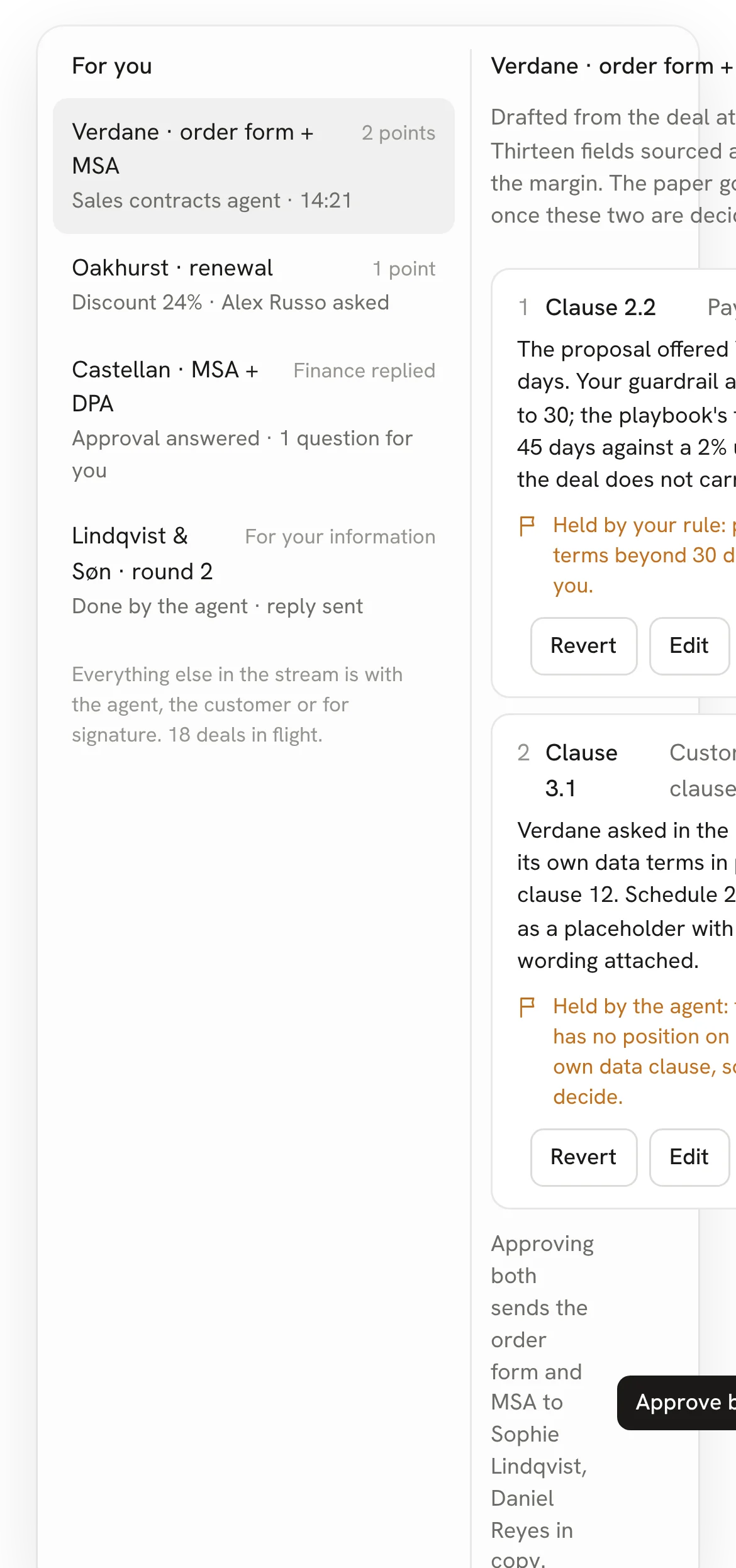
03Decided
Your lawyer
Two points reach your lawyer: the payment terms and the customer’s data clause. Approve, edit, or revert, with the clause beside.
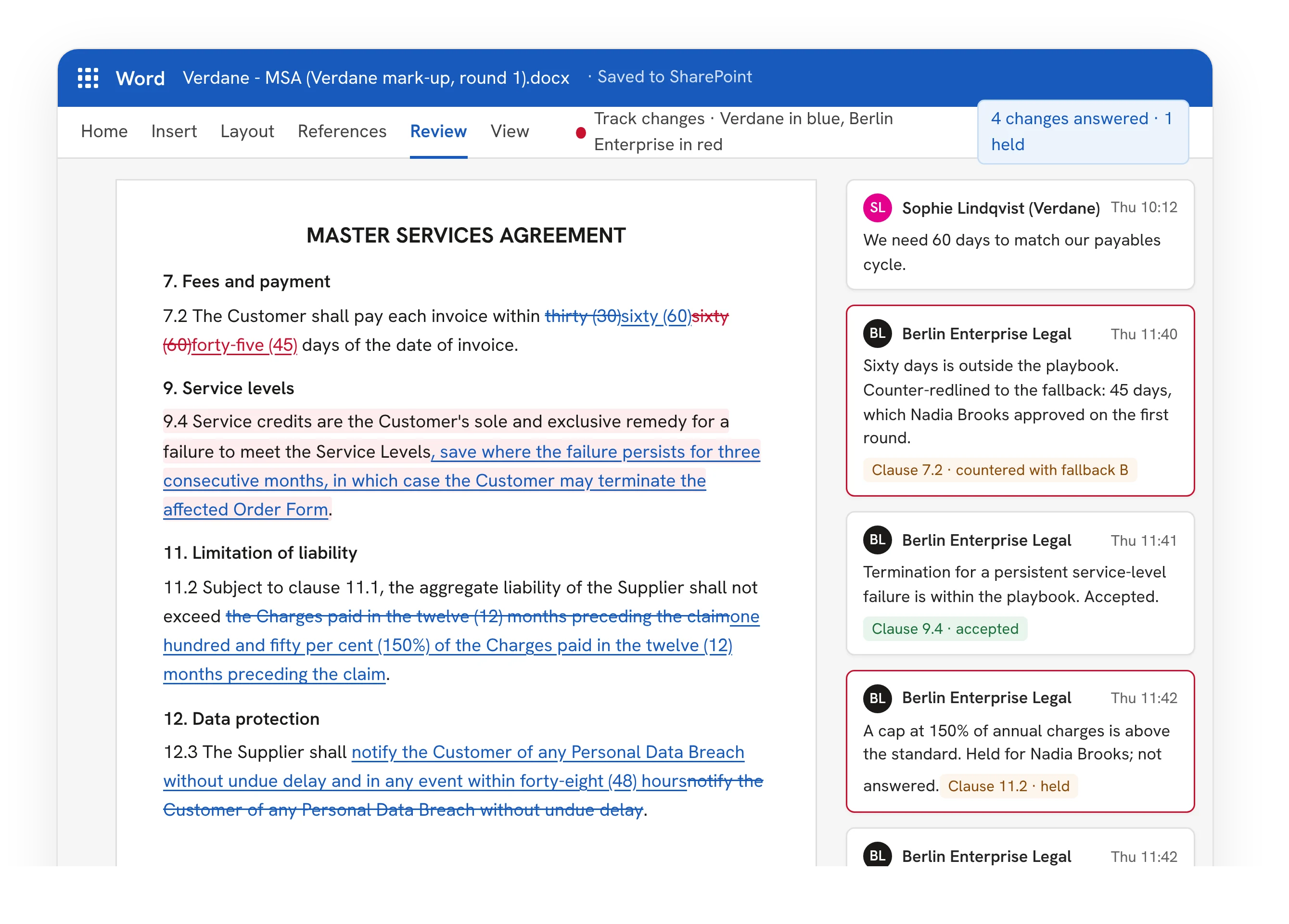
04Negotiated
Agent · each round
The customer’s redlines come back on your paper: accepted within the playbook, countered with the fallback where not, held for a lawyer where new.
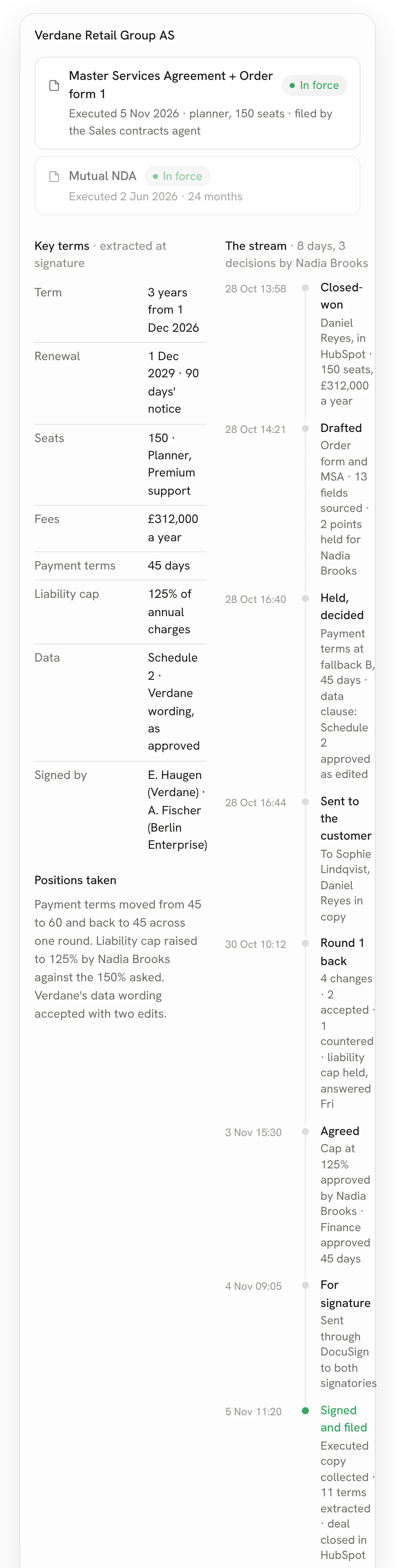
05Signed and filed
Agent
The agreed paper goes for signature; the executed copy lands in your record with its terms, and the deal is closed in HubSpot.
Swipe for the five stages. Screens use fictional deal data.
Five skills, one agent, every step in-between
Document drafting
From the deal as it actually exists, every field and clause to your house positions. See the skill.
Answer the customer’s redlines
Each change accepted, countered with the fallback, or held for a lawyer; untracked edits flagged.
Seek the approvals
Commercial, finance, or privacy asked at the thresholds you set, by email.
Send for signature
Through DocuSign or Adobe Sign, chased, the executed copy collected.
Filing into your record
Terms filed at signature, the deal closed in the CRM. See the skill.
Two things bring a point to your lawyer
A rule you have set
Terms beyond 30 days, a discount above 20%, a change to the data clause: drafted to your position, then held for your decision.
The agent’s own doubt
The deal and the proposal disagree, or no position in the playbook: it asks a lawyer rather than guessing.
Everything else
Drafted and sourced in the margin. Revertible in one click.
Built with your lawyers,
deployed by Flank
A design document, signed by both sides
What is drafted from which template, which redlines it may answer, what is held and for whom.
Your playbook, written down
Position by position, with the fallbacks, from what your lawyers already do.
A prototype on your own paper
Your last closed deals and their redlines, before anything is live.
Live, in your own environment
Your region, zero data retention at model providers, single sign-on, an audit trail. Agent fees start when it is live and doing the work.
“We run it on the quarter’s closed deals before anyone relies on it. The design document gets its last corrections from that sitting, not from a workshop.”
JS, Client Delivery Lead
Agents on this stream are live today at global enterprises.
Sales closes the deal as it always has
The deal in HubSpot or Salesforce, or the shared legal inbox, through permissions your admin grants.
From the CRM
A deal marked closed-won carries customer, seats, and price; the paper is written back to it.
From the inbox
A forwarded proposal or redline, labelled In progress and then Resolved in Outlook.
Replies on the thread
The draft and the positions go back to the rep, with legal copied in.
Connectors are built per system; one not shown here is built for you.
The questions we get asked first
What if the customer will not sign our paper?
The agent negotiates on your paper to the playbook and holds what is outside every fallback for your lawyer. A customer’s own paper is redlined by the Contract review skill, which the same agent can use.
Our deals are in Salesforce, not HubSpot. Does that matter?
No. The agent reads the deal through a connector to either, with the fields your admin maps.
Who approves the discount?
Whoever approves it today, asked by email at the thresholds you set. The agent approves nothing itself.
What if sales sends the wrong deck, or the deal is wrong?
It reads the deal, the proposal, and the record together and flags where they disagree, drafting from the source you ranked first.
Who is responsible when it drafts the wrong term?
Your lawyers stay responsible for the legal positions; a held point goes nowhere until they decide. Flank is accountable for the agent doing the work as designed.
What about renewals and expansions?
The same stream: a renewal date or an expansion stage starts the agent from the terms already agreed.